Sleeve Tattoos: a complete guide about the cost, sessions and design
Last updated: 2026/09/14
Being a tattoo artist for over 10 years, sleeve tattoos have always been my favorite projects, for how challenging they can be.
A lot of people budget a sleeve like a big tattoo, when it is closer to commissioning a sculpture. A small tattoo, a chest piece or a back piece sits on something flat, so the artist draws it out once and that is what people see. Unlike those projects, an arm turns, and every few degrees of rotation you are looking at a completely different picture. This naturally makes a sleeve project, including the design and the whole workflow, very different from other tattoos, especially the small, medium pieces. This is the part a lot of clients, including junior tattoo artists — or even senior artists who do not have a lot of big project experience — don't see and don't plan for. We totally should, because designing it as a 360-degree project is the only way to make sure a sleeve tattoo can look good from every angle.
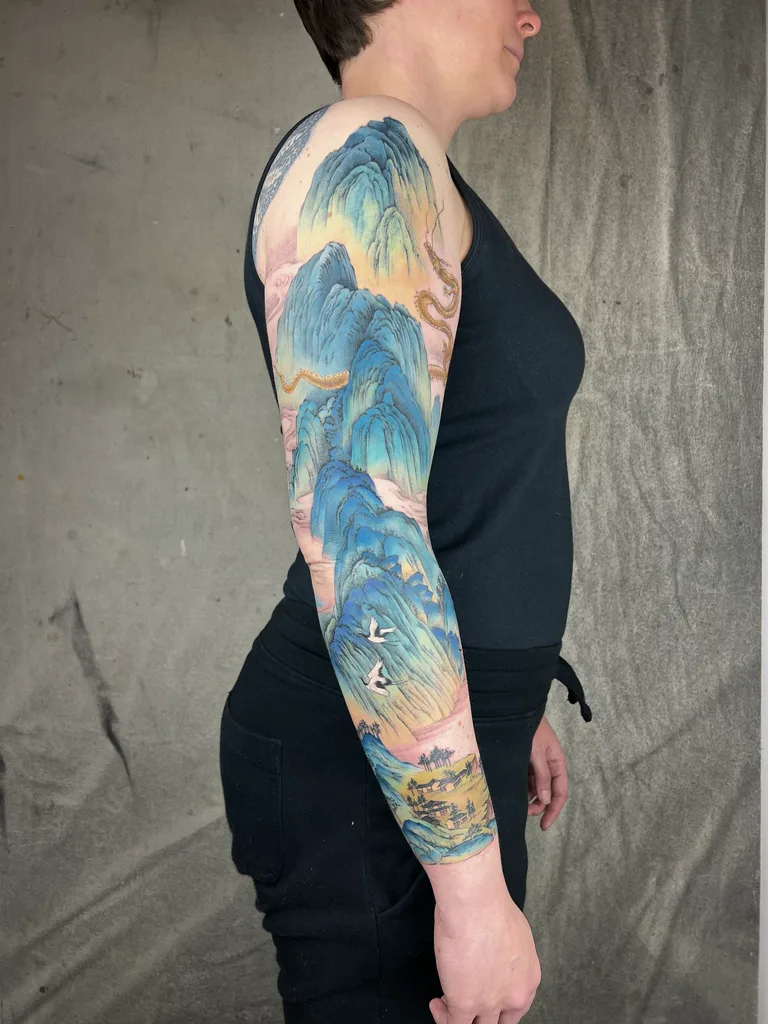
How much does a sleeve tattoo cost
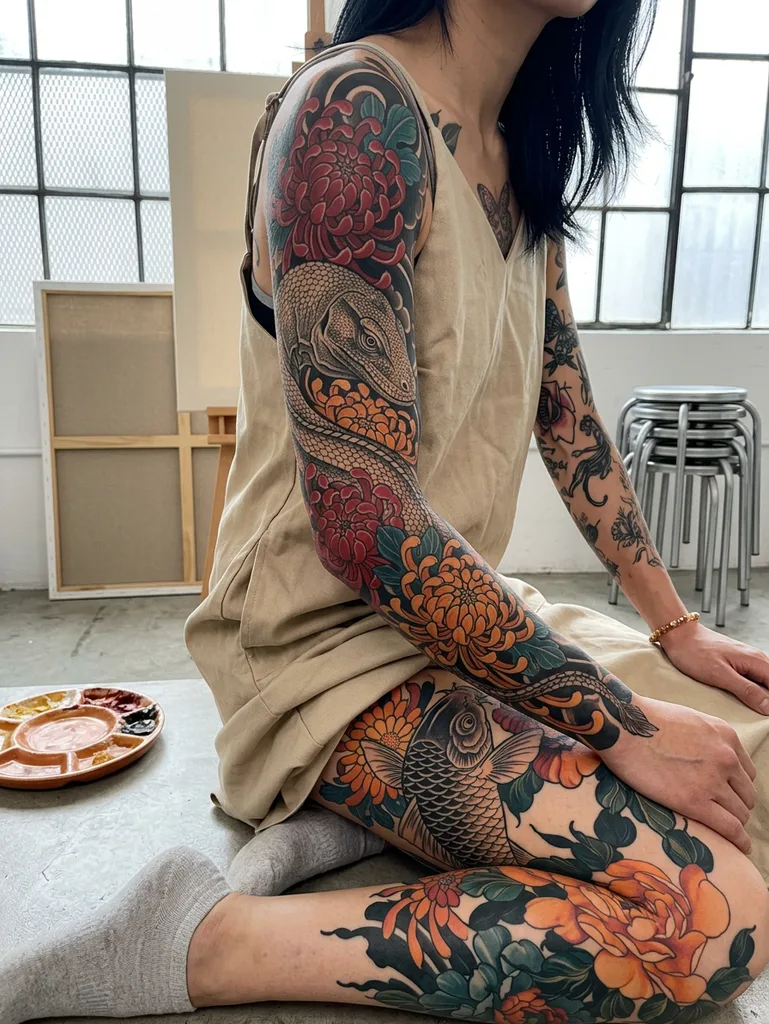
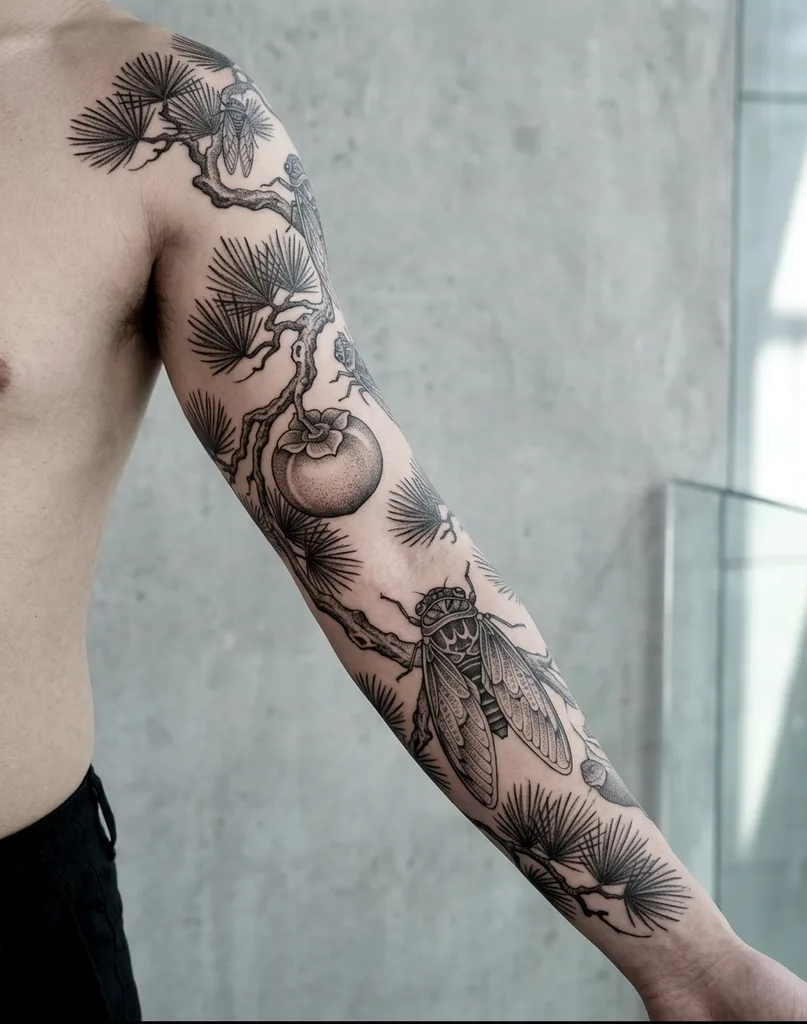
A full sleeve in the US runs somewhere between $1,000 and $12,000, and the spread is that wide because you are buying hours, not a product. Depending on different tattoo styles, a full sleeve can be anywhere from 2 days' work all the way to 12 days' work, or more, at roughly seven hours each day. My fastest sleeve tattoo (although I wouldn't call it a full sleeve tattoo, because the inner side is basically empty, but it is a full sleeve tattoo by many people's definition, if you only look at the outer side pictures) took roughly 18 hours to make:
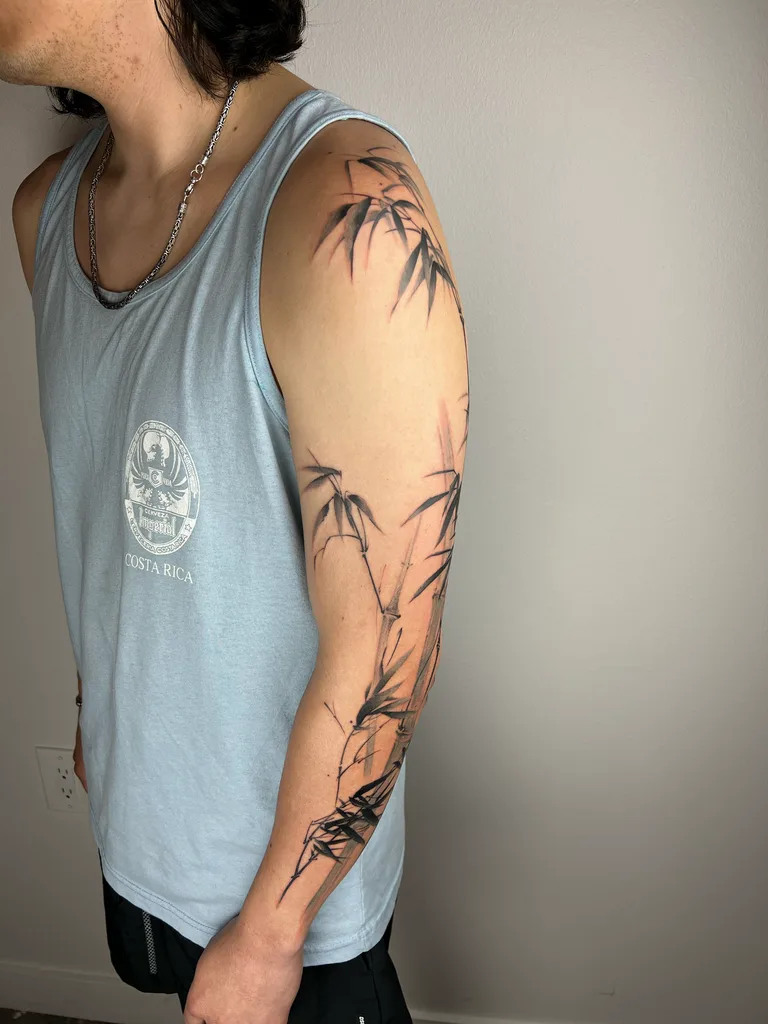
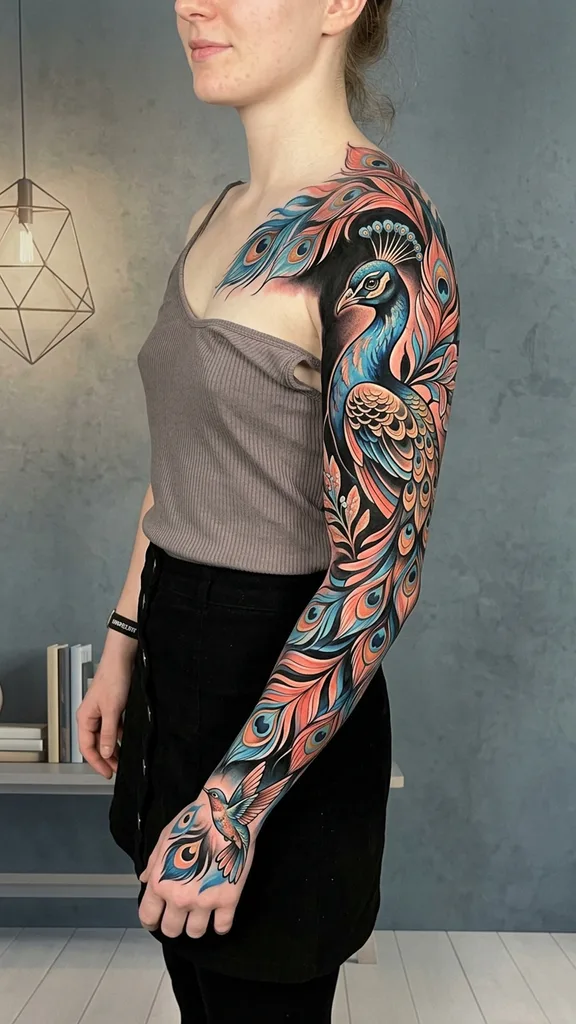
And I would rather call it a big-size tattoo that runs across the arm, instead of a 360 full-sleeve tattoo. In my opinion, a 360 full-sleeve tattoo must connect well, and shows a different visual from every angle, whether you bend the arm or straighten it up, lift the arm up or put it down. My most common sleeve projects, like those ones, would cost eight to ten sessions for women, and above ten sessions for men.
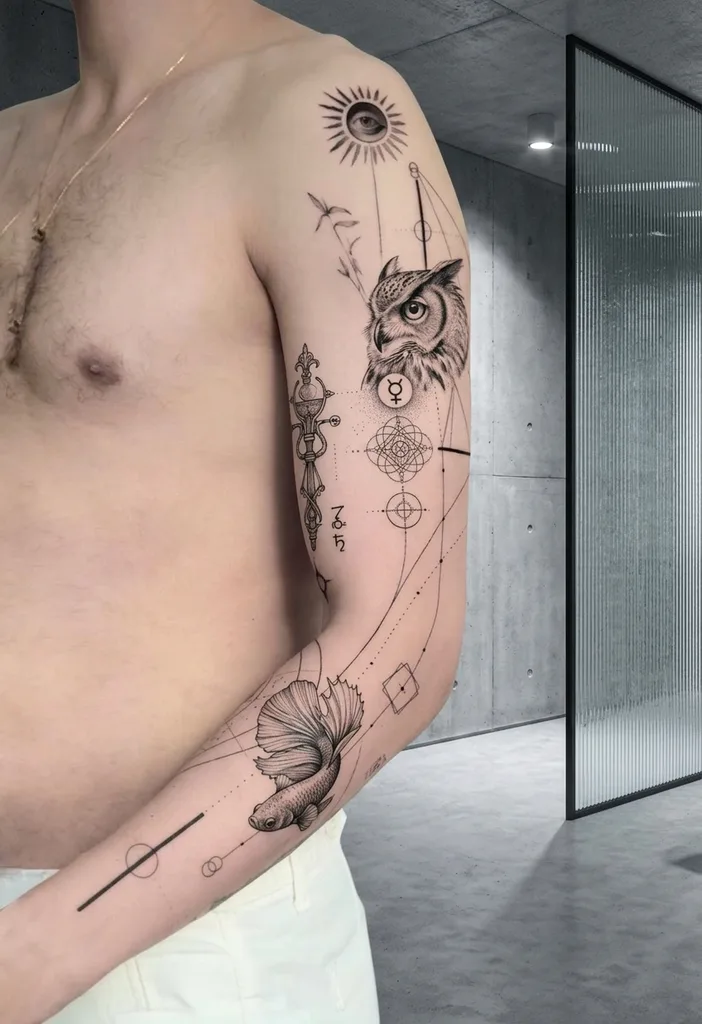
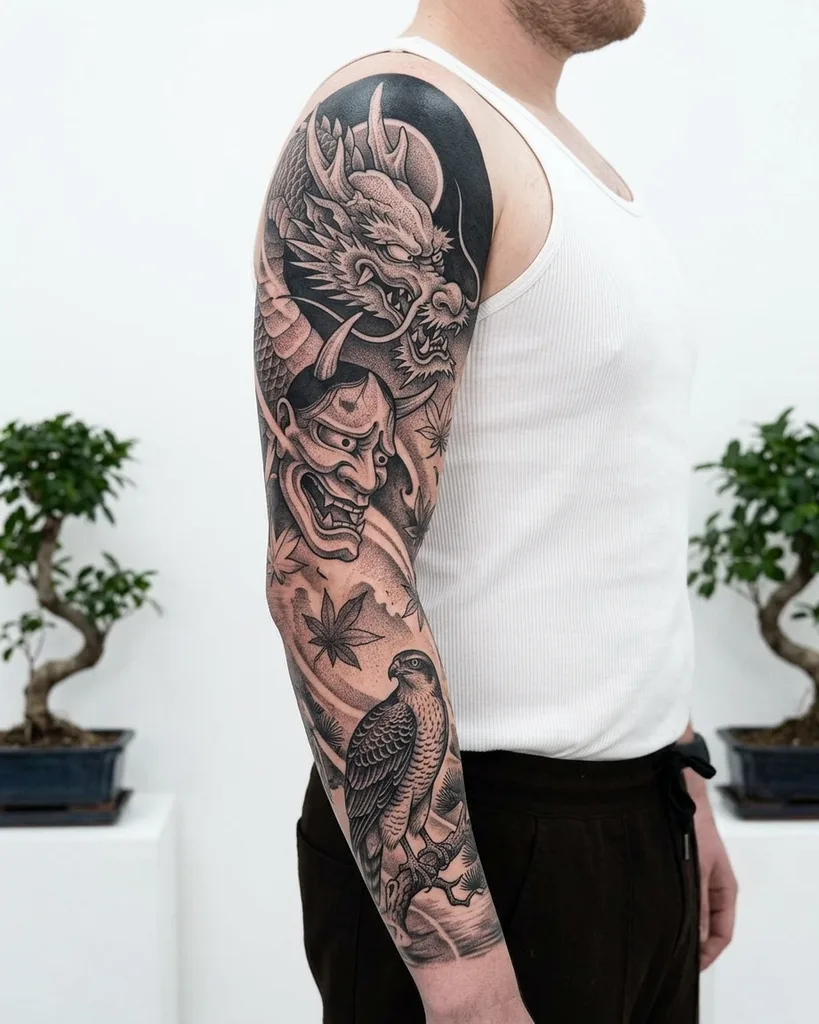
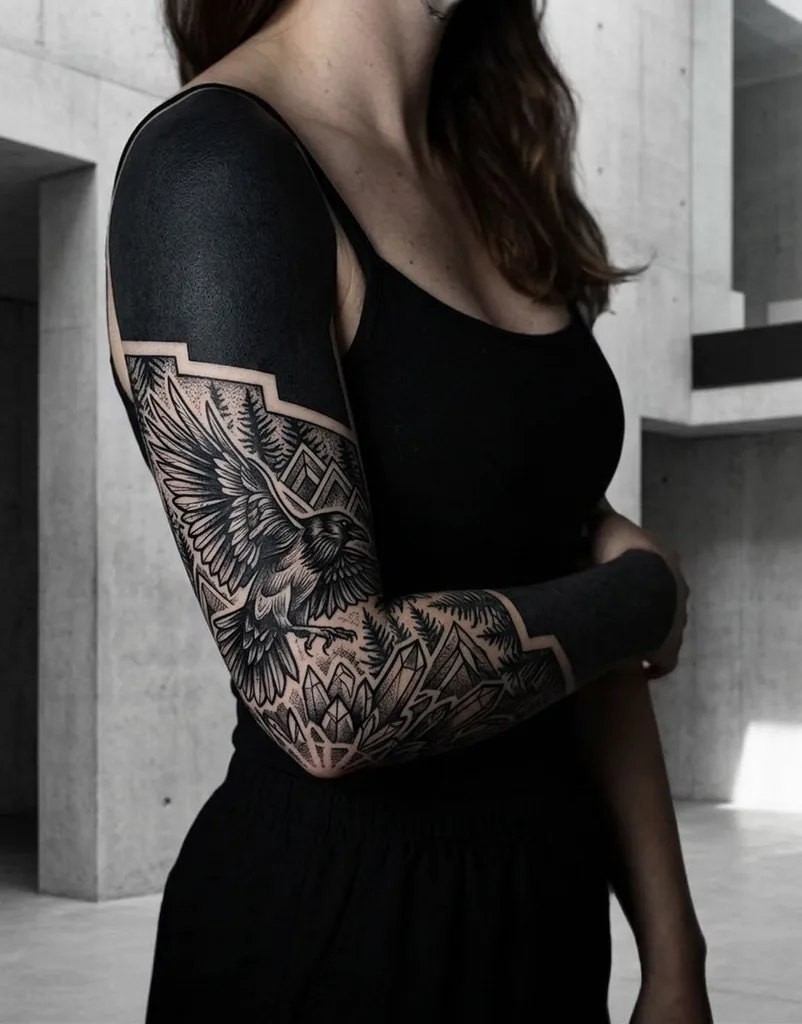
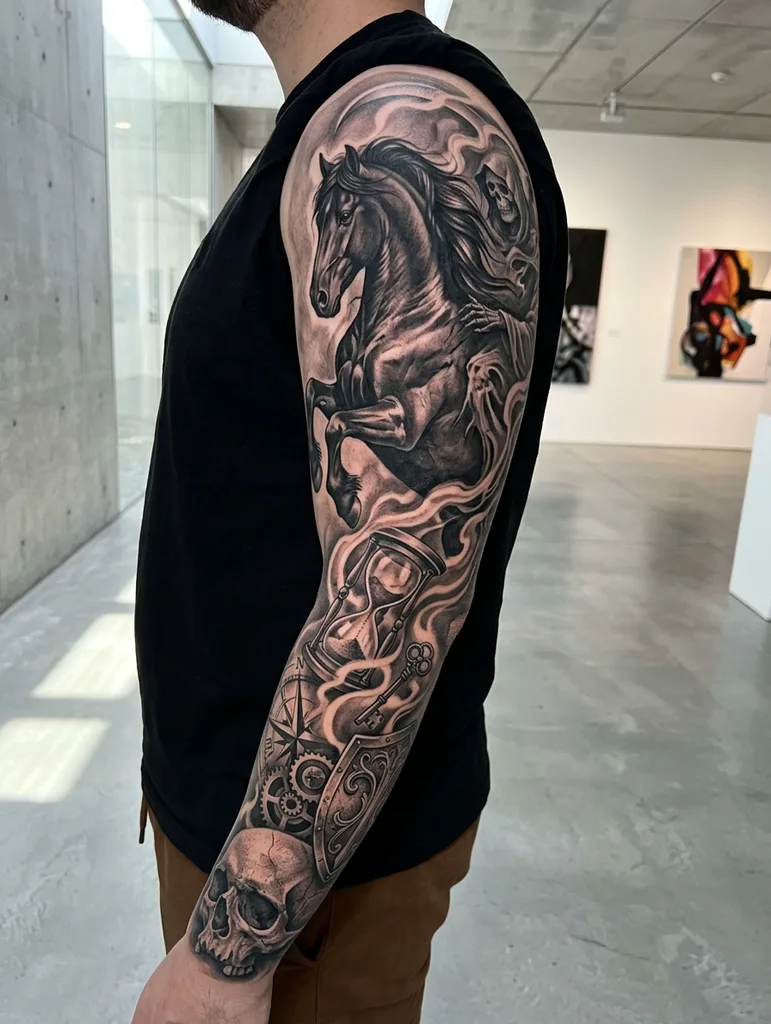
These tattoo sleeves are more carefully thought through, designed, and the details put into the skin are also a lot more.
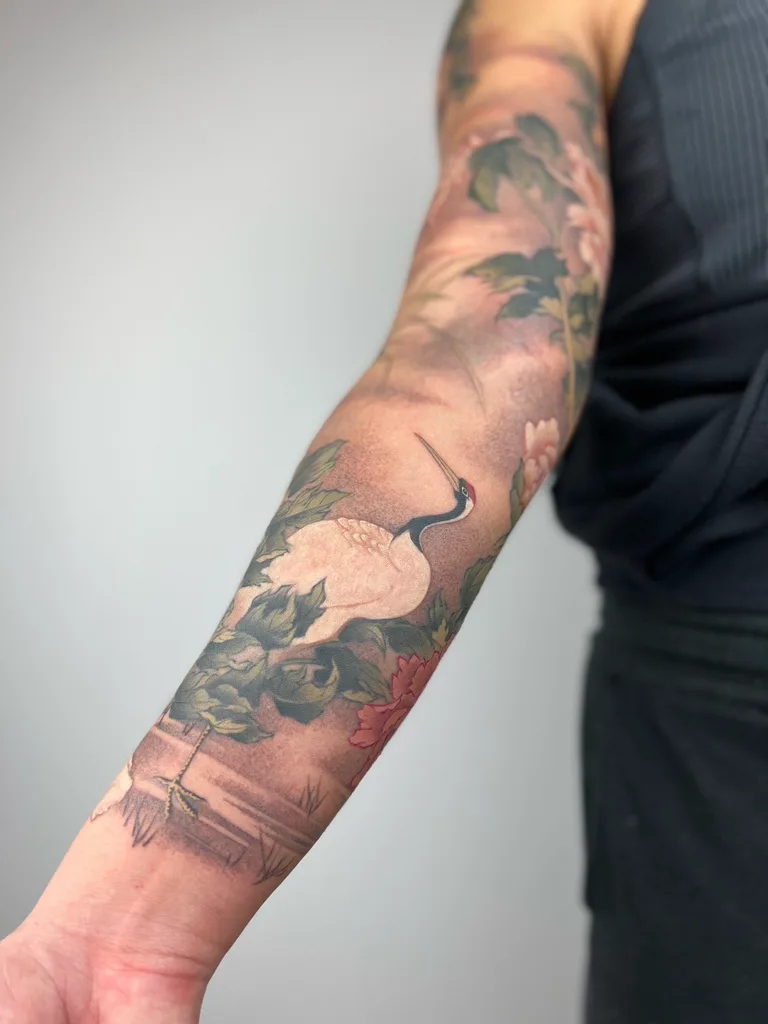
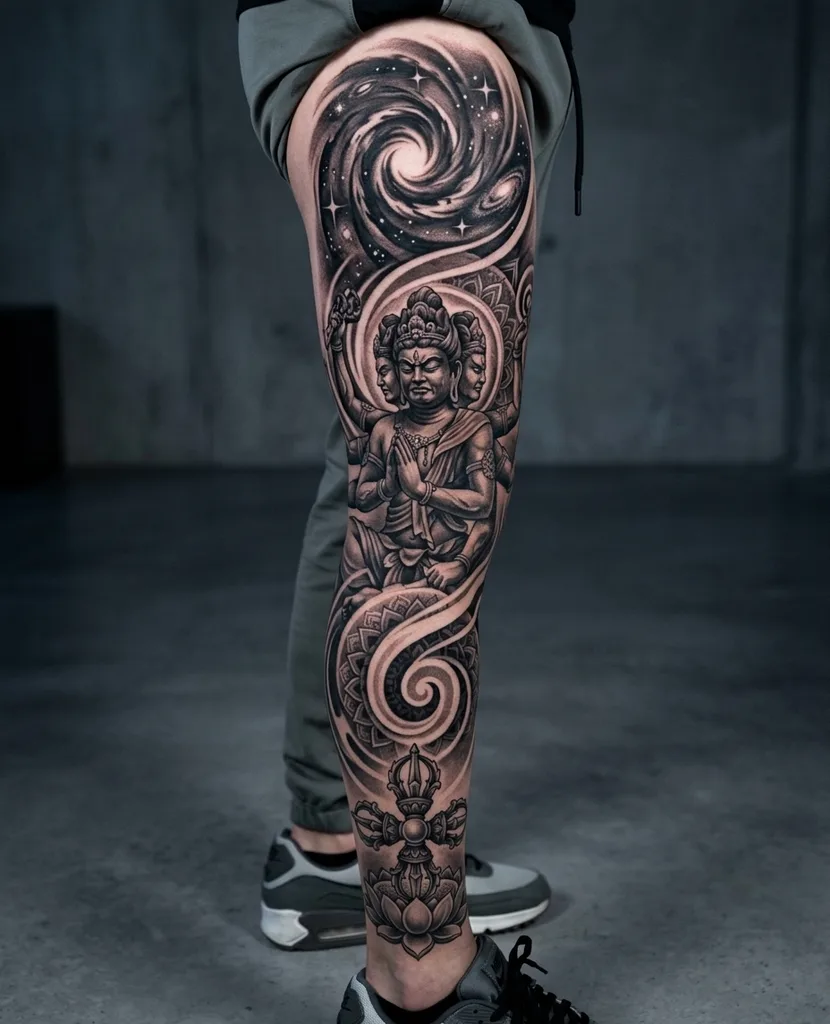
Now, every tattoo artist has a different understanding of what a tattoo sleeve should be — some think a big simple tattoo running across the arm is called a sleeve. Others think it must be detailed, well-designed, contains a lot of layers or so. Some styles, for example, the minimal style, can take up the entire workspace but only have a few lines, which could be made in a day. Some other styles, for example my Asian style, and some other artists' neo-traditional styles, have a lot of elements intertwined. Just editing each element's sizing according to the body shape could already take a day.
I'm saying this to get to this point: The price for a tattoo sleeve can vary hugely. It isn't decided by the size. The price is defined by the complication, amount of details and hours needed for that exact style.
If you're curious about hourly rates, they sort into four rough tiers. A junior artist charges $80–150, a mid-level artist $150–250, a senior artist $250–400, and a professional at the top of the field asks $400 and up.
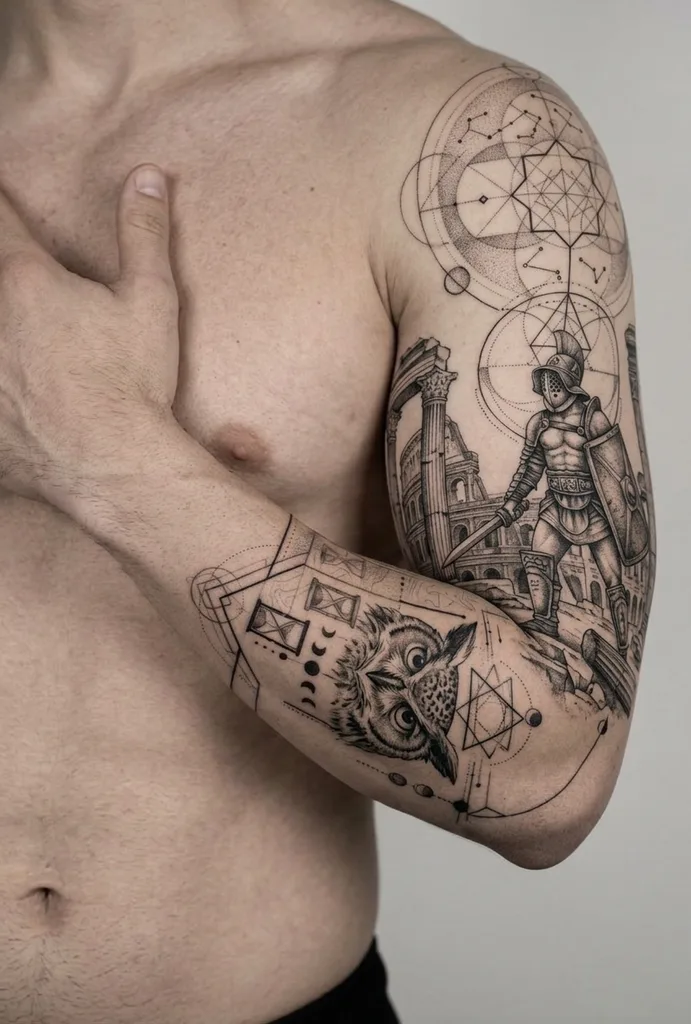
But most artists do not quote a big project by the hour. Large multi-session work usually gets a day rate, or a single quote covering the whole thing including the design, and you can expect a discount off the hourly number a lot of times. Not only because you are booking a lot of sessions at once, but also, a lot of artists generally like to take on bigger projects, so they are more willing to offer discounts for those clients.
The design is real work and it is often invisible in the quote. A full sleeve can take tens of hours of drawing before anybody sits down. Some artists charge a separate design fee for that and some charge just a design deposit (which is usually deducted from the total price and only counting the hourly rate). I would say booking a sleeve tattoo project, price-wise, favors the client, because if you count the actual work hours artists put into a sleeve tattoo, usually the actual hourly rate becomes much, much lower than what they would charge for a small tattoo.
How much a half sleeve costs
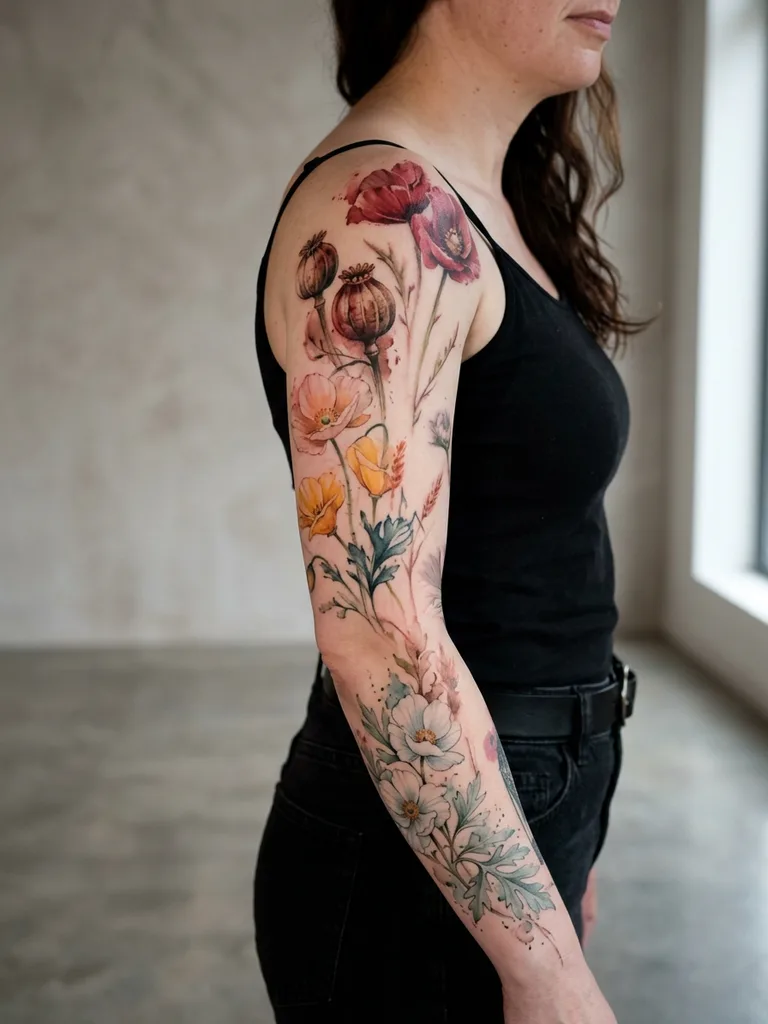
A half sleeve is quoted the same way, and the session count depends on which half. The upper arm has a much bigger space than the forearm. A forearm half sleeve usually runs 2 to 6 sessions. An upper arm half sleeve runs 4 to 8, because there is more surface area up there, and you may have to wrap it around the shoulder, which makes it slightly more difficult to design and tattoo compared to a forearm, which is pretty flat and easy to tattoo.
A half sleeve is not half the price of a full one. You save surface area, which is hours, but the design work and the planning barely shrink.
Why people choose a sleeve
- It holds together as one thing. A planned sleeve looks different from five separate tattoos on the same arm.
- It solves the collection problem. If you already have scattered work on an arm, a sleeve is the usual way to tie it together. (Although I don't recommend doing it that way.)
- The arm takes ink well. Outer arm skin is stable, holds detail, and the pain isn't too bad.
- It looks impactful and nice. The arm, especially the upper arm, is also a focal point on the human body, which makes the tattoo pop out.
The honest downsides
It is a months-long commitment, not an easy purchase. Healing time between sittings stretches the calendar.
It is expensive. If you design the sleeve tattoo as a whole thing, which is the right way to do, it can get quite pricey. Sometimes, because of the budget, people want to get small tattoos first and slowly add onto it, which can create a lot of problems for future designs. To do it the right way, you kinda have to design the whole thing at the same time, just like designing a house. But it can cost a fortune.
The inner arm is a different experience from the outer. People book a sleeve having only been tattooed on the outer forearm, and the inner bicep and the elbow ditch catch them out.
Who I would talk out of it: anyone whose budget only covers a sleeve from an artist they are not sure about, or they have to bargain with their favorite artist to cut down some sessions the artist needs, and anyone who wants to design it as they go with no overall plan. On the budget question, pay the design fee to get a design and plan at once, and then make a partial tattoo first, such as make a half sleeve first. Do not save budget or rush the planning and designing.
Generate a custom sleeve tattoo design — free, no signup.
What makes a sleeve different from one-off tattoos
With a small tattoo, everyone is looking at execution. Is the line clean, is the shading smooth, did it heal well. Those are fair questions and they are mostly about technique. Design-wise, everyone is looking at whether this is a cute little picture or not.
A sleeve moves the difficulty somewhere else, and this is the part both clients and a lot of artists skip over. A sleeve is a design problem first. Taste and planning decide whether it works, and no amount of clean techniques rescues a composition that was never planned.
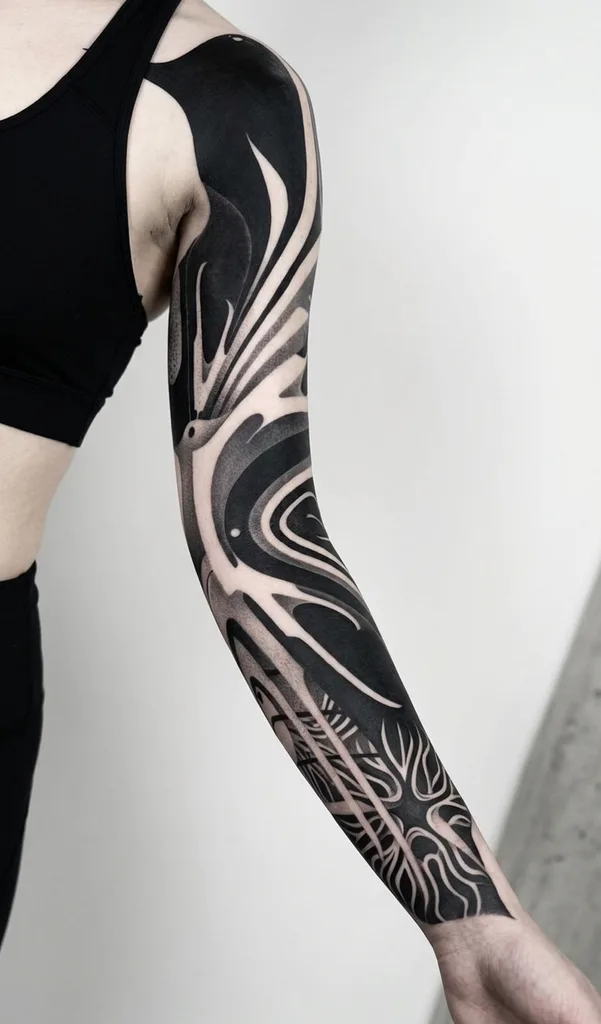
Here is why it is harder than a chest or a back piece, which are flat surfaces you design once. An arm is a cylinder, so every step you take around it changes the picture, and a composition that looks balanced from the front can fall apart from the side. Designing for that means holding three or four views in your head at the same time and making all of them work.
Now go look at sleeve photos online and notice that almost all of them are shot from a single angle. Plenty of artists work that way too, building something that photographs beautifully from one side and looks wrong the moment you walk around it, then posting only the side that worked. You cannot see the problem in the picture that's not posted.
If you are a client reading this, here's the right way to look for a good sleeve tattoo artist: get an artist who posts their sleeve work from every angle, photos that cover the sleeve 360 degrees, not a single angle with zoom in zoom out photos. This is the only proof that the artist values it and is putting effort into the sleeve structure.
If you are an artist reading this, are you happy with your own sleeve work from all 4 angles and be happy with them all? I'd like to think of it this way: if we hold ourselves to higher standards, then the chance of us growing into better artists is higher.
How to plan a sleeve that holds together
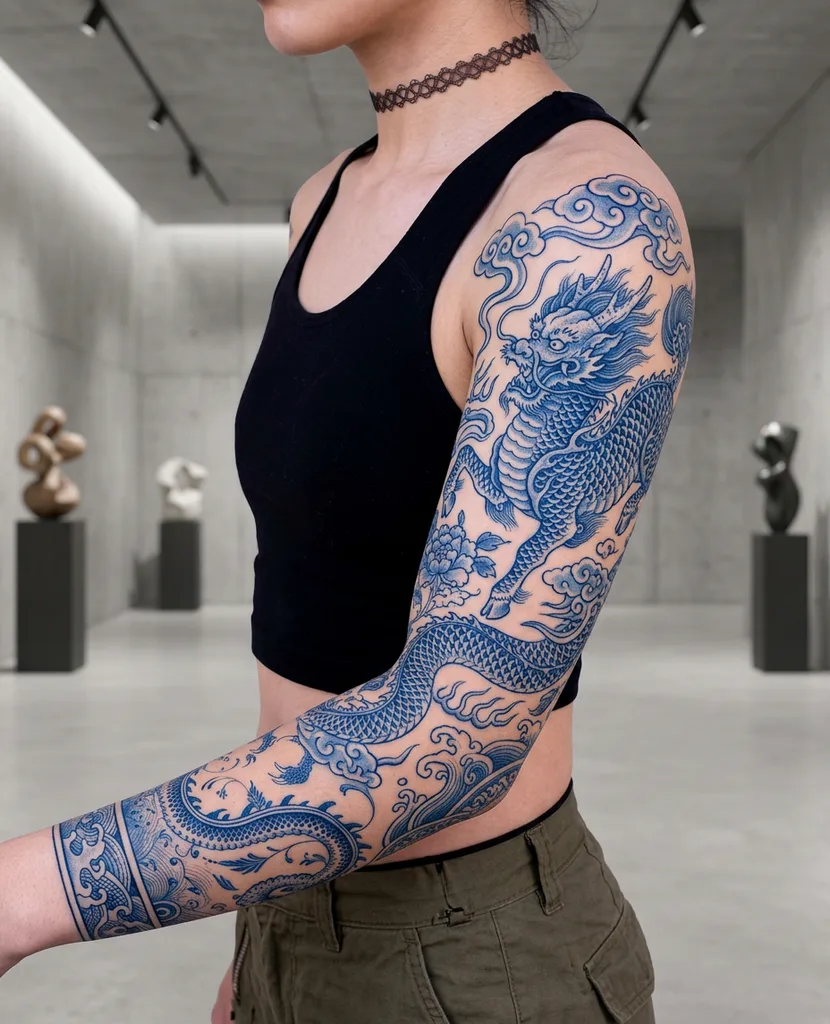
Design the whole thing first, even if you build it in pieces. Designing a sleeve and stacking small tattoos up an arm are two different logics, and they do not converge. If you want something you will still like in ten years, the overall composition has to exist before the first needle goes in.
The alternative traps you, because it sounds much easier with one sitting and much less budget. That way you get something done at once and don't have to be responsible for thinking about the future. In reality, this usually happens: you do one section, and later you want to add something, and by then it's restricted by what you did first. Whatever you add afterwards tends to look strange, because it is fitting into a gap, instead of planning for the element to fit with the body. From then on you are patching, and you will spend the rest of the project trying to rescue the part.
The exception is if scattered separate pieces are the look you actually want. That is a legitimate choice, just make it on purpose rather than a result of not planning well.
Budget for the background. Clients cut sessions to save money, and the usual casualty is background. But a sleeve is one composition, so pulling elements out of it does not make it the same quality but cheaper.
Want a sleeve tattoo after reading this article? Describe your idea and get design ideas in seconds.
Half sleeve vs full sleeve: how to choose
You can start with a half sleeve, or with a single main subject, as long as you design it as a full sleeve from the beginning. That is the whole answer, since where you stop is a budget and scheduling question and you can stop anywhere, but the plan has to cover the whole arm before you start the part you can afford.
Do it the other way round and you are back in the trap above, fitting later work into gaps that were never meant to hold it.
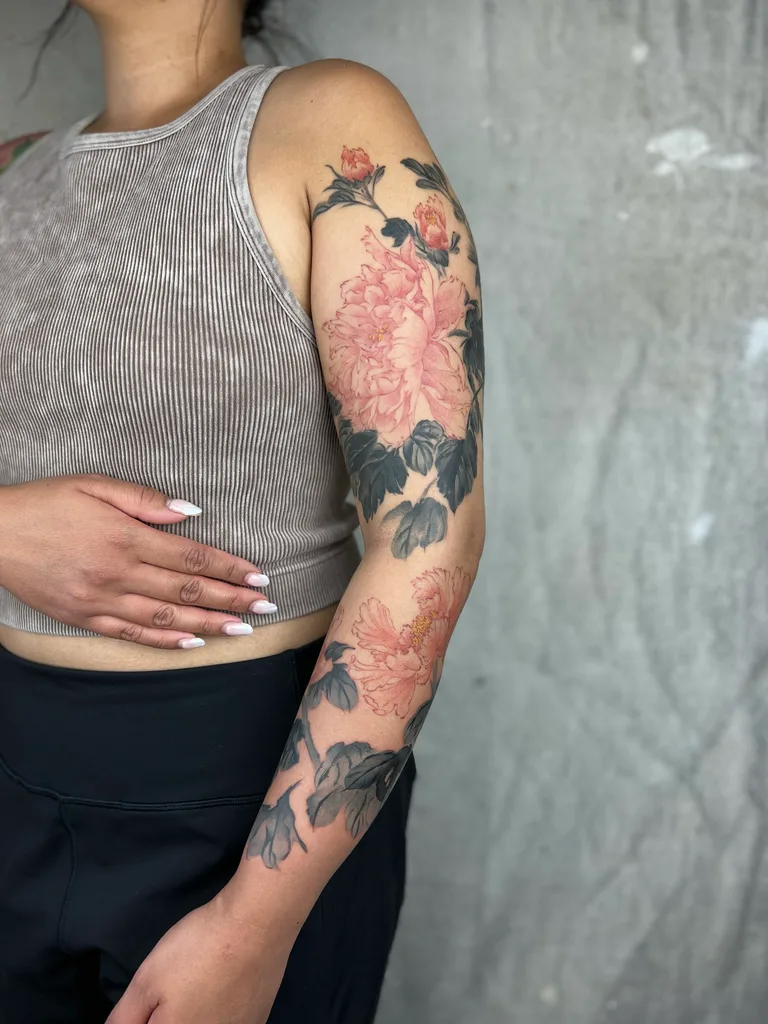
Best styles for a sleeve
Asian traditional is the style built for this. This includes Japanese, Chinese, and Korean traditional. It is organised around covering limbs with background, flow and connective elements, and it handles the rotation problem well.
Blackwork and neo-traditional are the most forgiving of being built across sessions. The outlines can give you the whole picture at the first two sessions, then slowly getting filled up.
Realism is an impressive style. Instead of getting the outline done and then slowly filling in the rest, it is satisfying to see the realism build up session by session.
Trash-polka naturally needs larger space to work with.
I wouldn't recommend fine line or minimal style for a full sleeve. Personally, I think for a space as large as a sleeve, you need more details to support the size. With minimalism, unless the whole rest of your body is completely empty or keeps the exact same style, it wouldn't be a good idea to have a minimal tattoo sleeve. And with fine line, you will need a lot of elements and details to fill in the space. It can look either a little bit messy or empty.
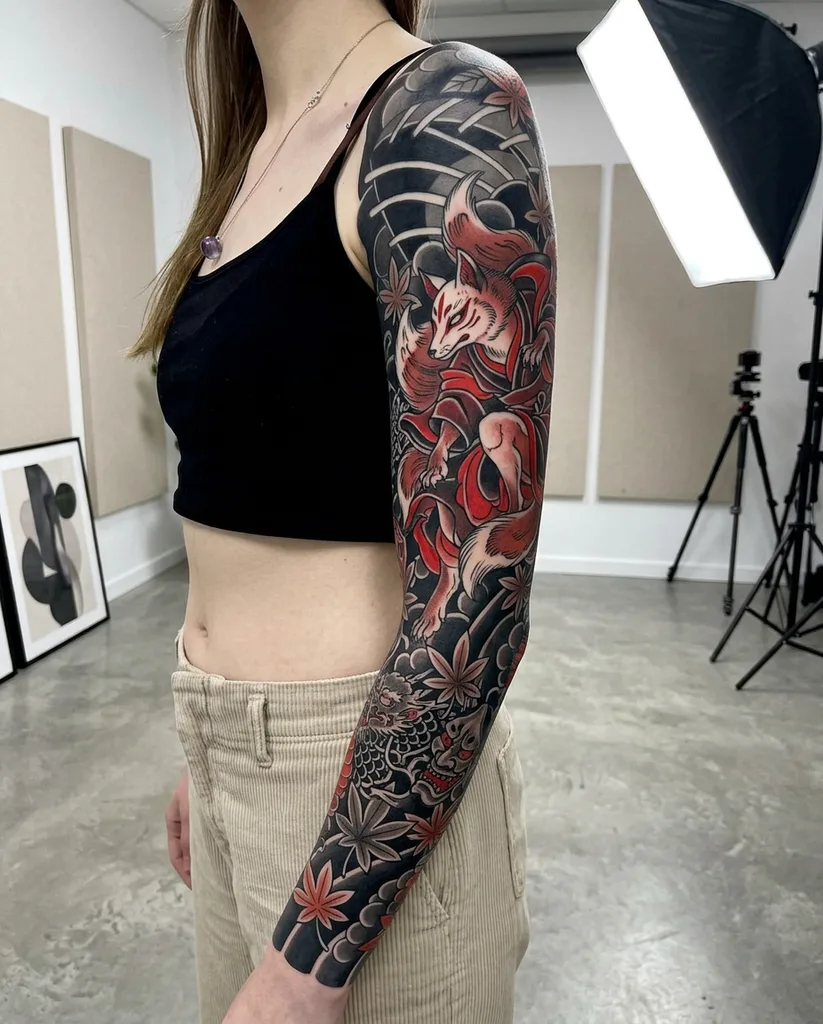
Best way to make sleeve designs
For something as large and multi-angle as a sleeve design, I would suggest building it in a few layers.
Main subject layers anchoring the composition, usually on the main focal points, e.g. outer upper arm or outer forearm where you see it most.
Background and connective layers such as clouds, waves, smoke or geometric fill. This is what separates a sleeve from a cluster.
Secondary subject layers connecting the main subject and the background layers, providing cluster effect, harmonic and contrast to the main element.
Transitions at the wrist and shoulder that decide whether the sleeve ends deliberately or just stops. The wrist line especially is a decision, not a default. So is the shoulder line — I'd like to leave the possibility of connecting it into a future (maybe) chest piece or back piece.
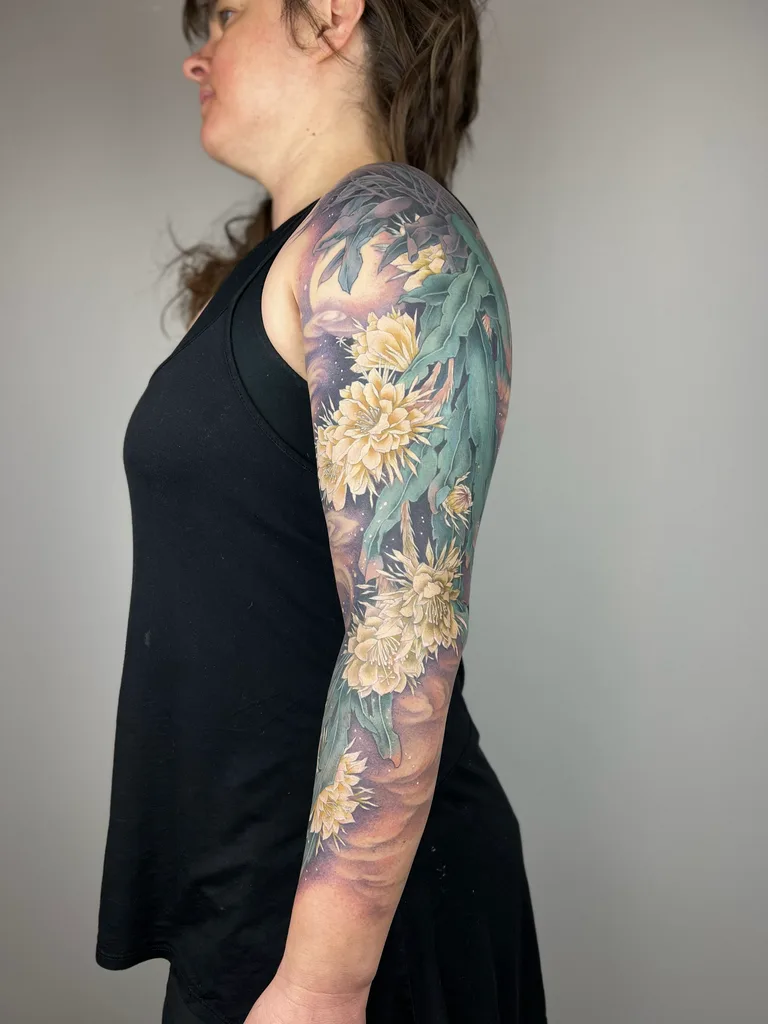
How to work with your artist across multiple sessions
Look for artists who post multiple angles. This is the single most useful filter you have, and it takes thirty seconds. Anyone who only ever shows one side of a sleeve or legwork is not solving the rotation problem — either they don't value that a sleeve needs to look good from every angle, or they don't care enough to spend time working on it. And in fact, a lot of tattoo artists don't work on it.
Book the sessions in advance. Good artists book out months, and a sleeve where you rebook after each heal stretches into years. That is not just slow, it changes the result — an artist's own style drifts over a few years, so a project dragged out that long can end up looking inconsistent, because in a sense it is.
Ask what they want from you between sessions. Usually it is straightforward enough — heal it properly, stay out of the sun, and come back when it has settled. The sun instruction matters more here than people think, since a tanned or peeling arm changes what they can do next.
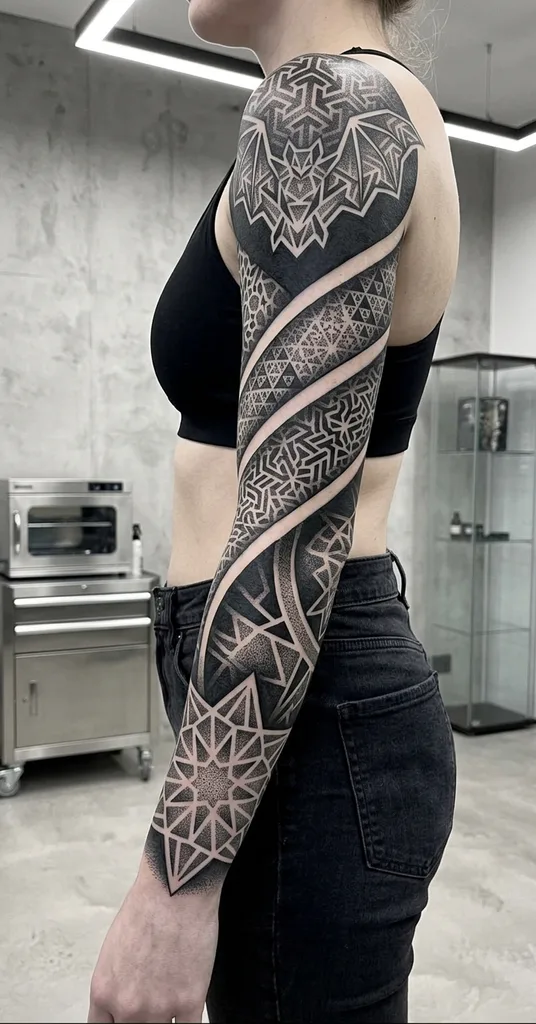
Pro tip about sleeve tattoos
Written by tattoo artist Jing
Spend the budget on the artist, and ask your artist:
- What is their workflow?
- What are the usual sessions a full sleeve takes? What is the overall budget?
If there is a budget limit, ask your artist if you can design it ahead of time, but only get a partial done. Reducing elements does not magically cut down the budget. For example, if you initially wanted 10 elements, by cutting it down to 5 elements, it doesn't cut your budget down to half. Because when there are fewer subjects, each subject needs to be bigger, and the artist will have to put in enough details to make the design look not too empty. Changing style, though, is a good way to save budget.
FAQ
How long does a full sleeve take to finish?
Usually 4 to 12 sessions of around seven hours, spread across several months. The calendar runs much longer than the hours, because each session needs healing time before the next and good artists book out weeks or months ahead.
Can I do a sleeve in one session?
You can, if your sleeve is a minimalist style, for example containing only a few lines. In most cases and other styles, no.
Do I have to design the whole sleeve before starting?
You don't have to, but this would bring you the best result. Not every detail, but the overall composition has to exist. Sleeves built piece by piece with no plan end up looking assembled, and fixing that later means covering work you already paid for.
Can I add to an existing tattoo to make a sleeve?
Often yes, and it is a common way sleeves start, but it also depends on what your old tattoo looks like. Bring the artist to the existing work early, because whether it gets incorporated, covered or worked around changes the entire design.
How long between sleeve sessions?
2-3 weeks at minimum, long enough for the previous section to settle so your artist can work next to it accurately. In practice their booking schedule sets the gap more than healing does.
Does the inner arm hurt more than the outer?
Yes, noticeably. Outer arm skin is thicker and less sensitive, while the inner bicep and the elbow ditch are thin and nerve-dense. Most people find the outer arm very manageable and get caught out by the inside.
Will a sleeve affect my job?
It depends on your industry and employer, and policies have been shifting for years. Check your specific workplace policy rather than a general rule.
Written by Jing — 10+ years tattoo artist, 8+ years tattoo mentor who trained hundreds of tattoo students and apprentices.
@tattooartist_jingMore sleeve tattoos designs, updated regularly
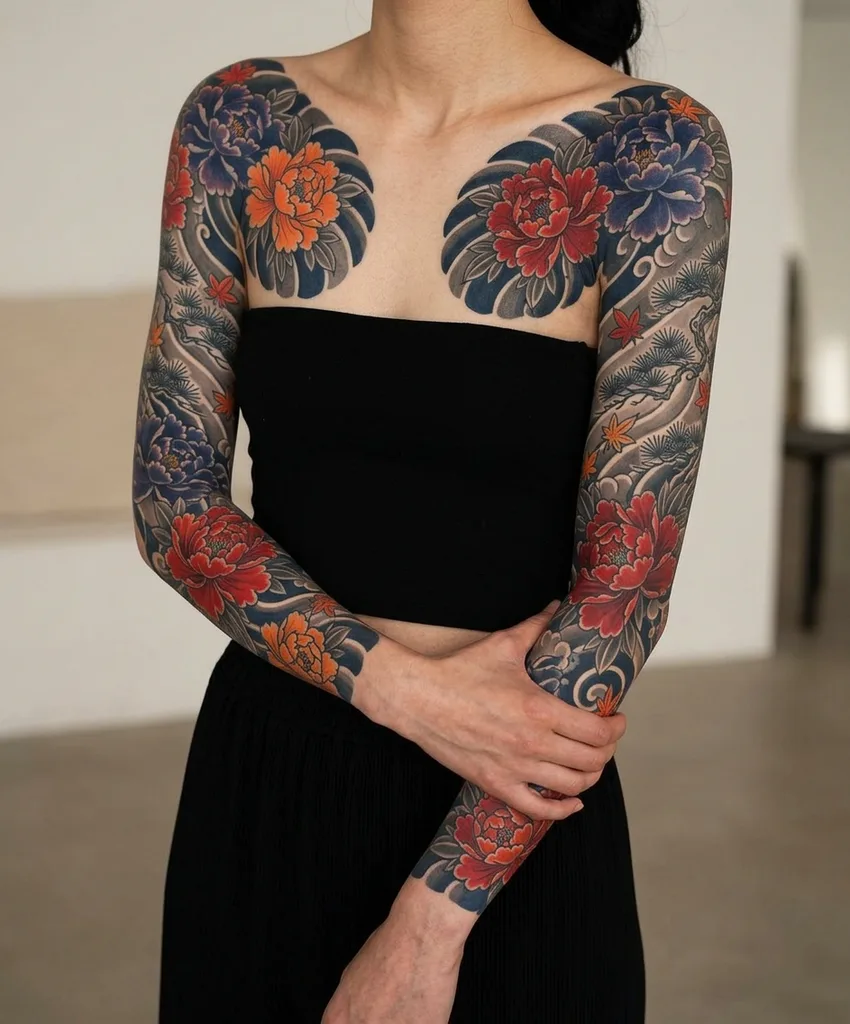 Generate similar design →
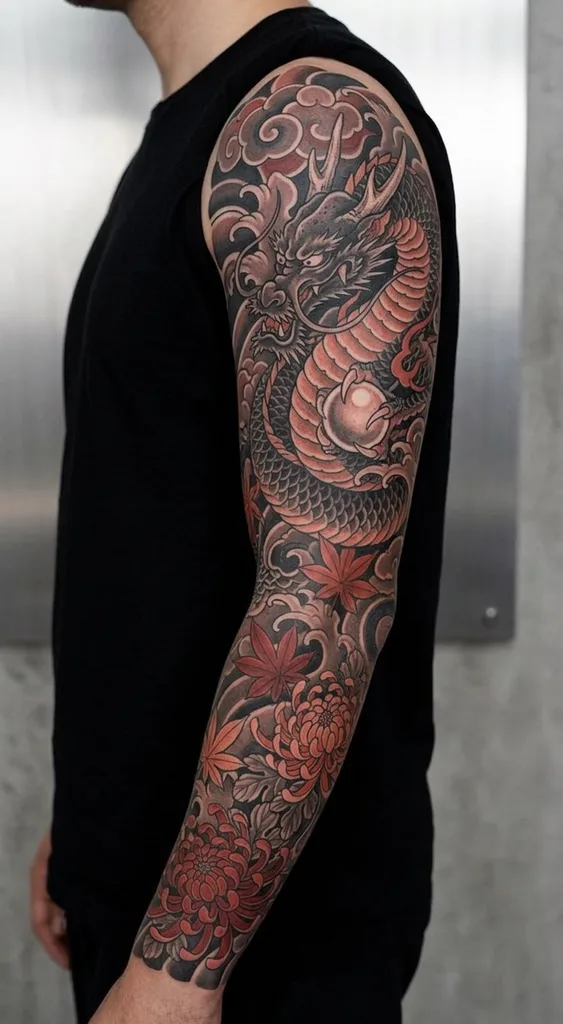 Generate similar design →
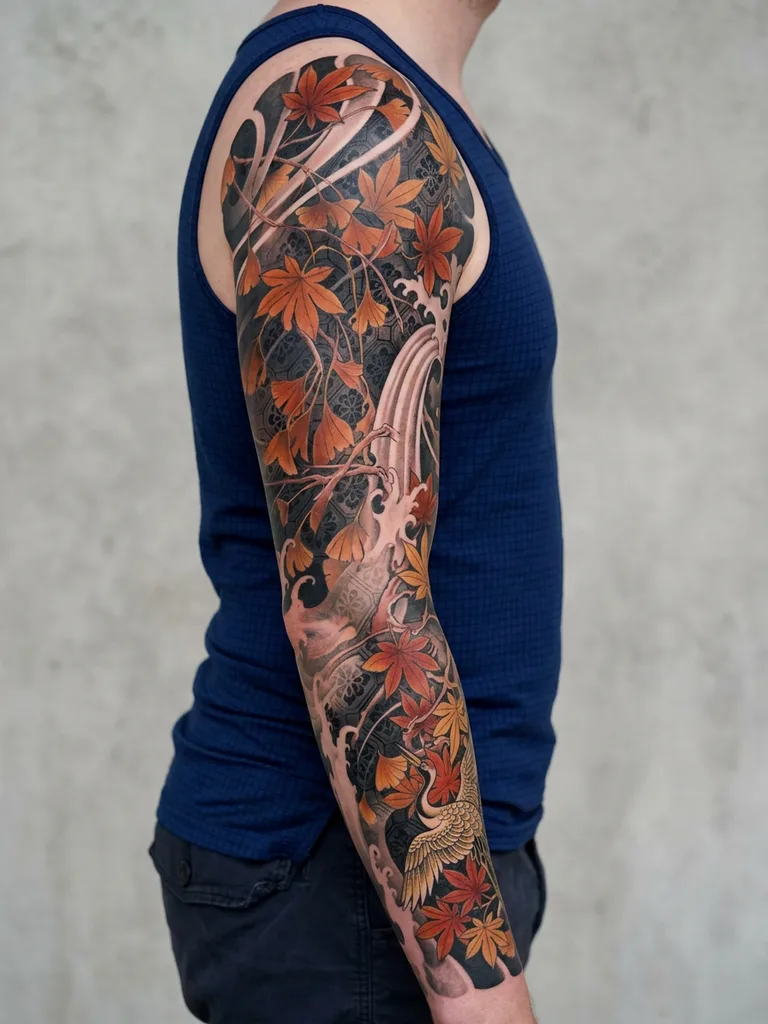 Generate similar design →
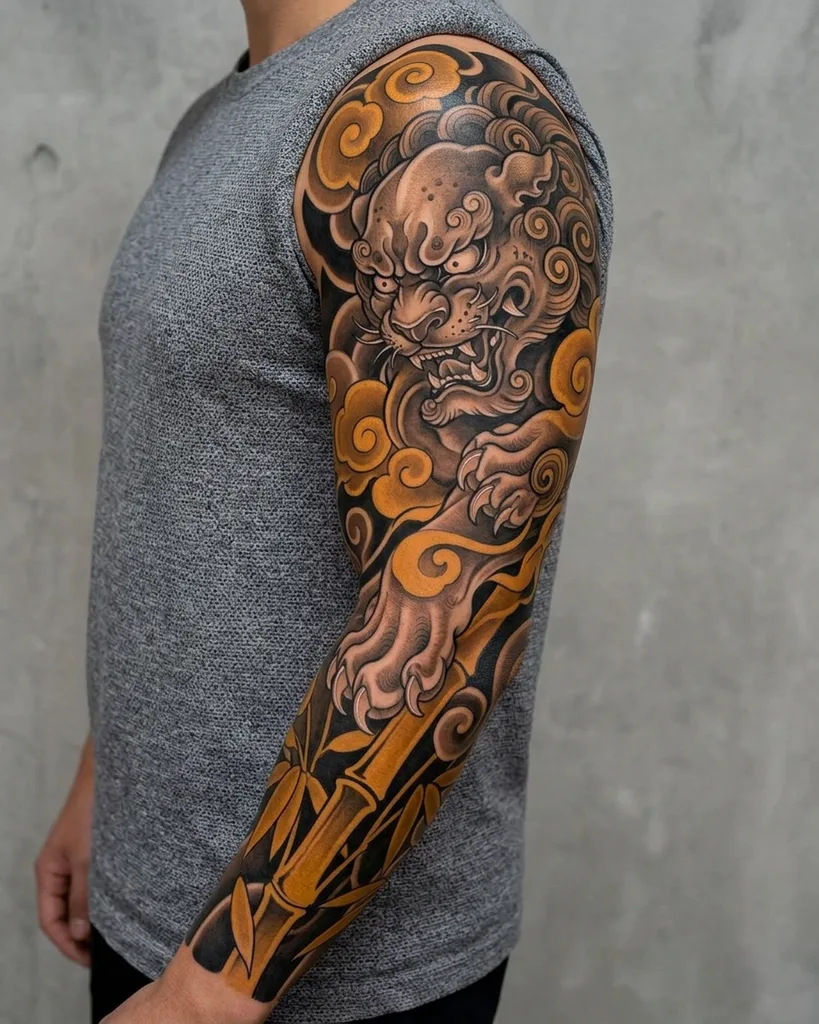 Generate similar design →
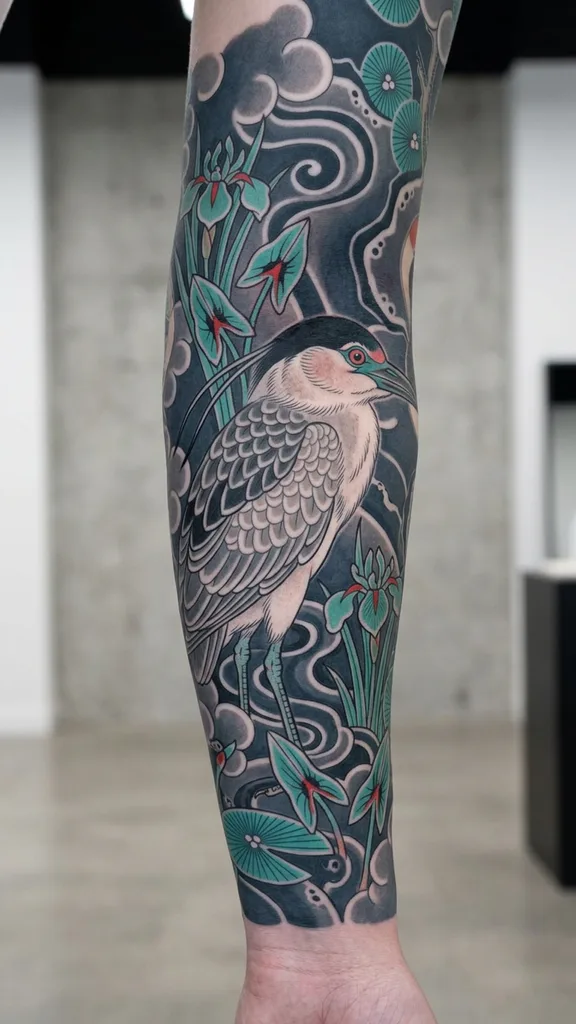 Generate similar design →
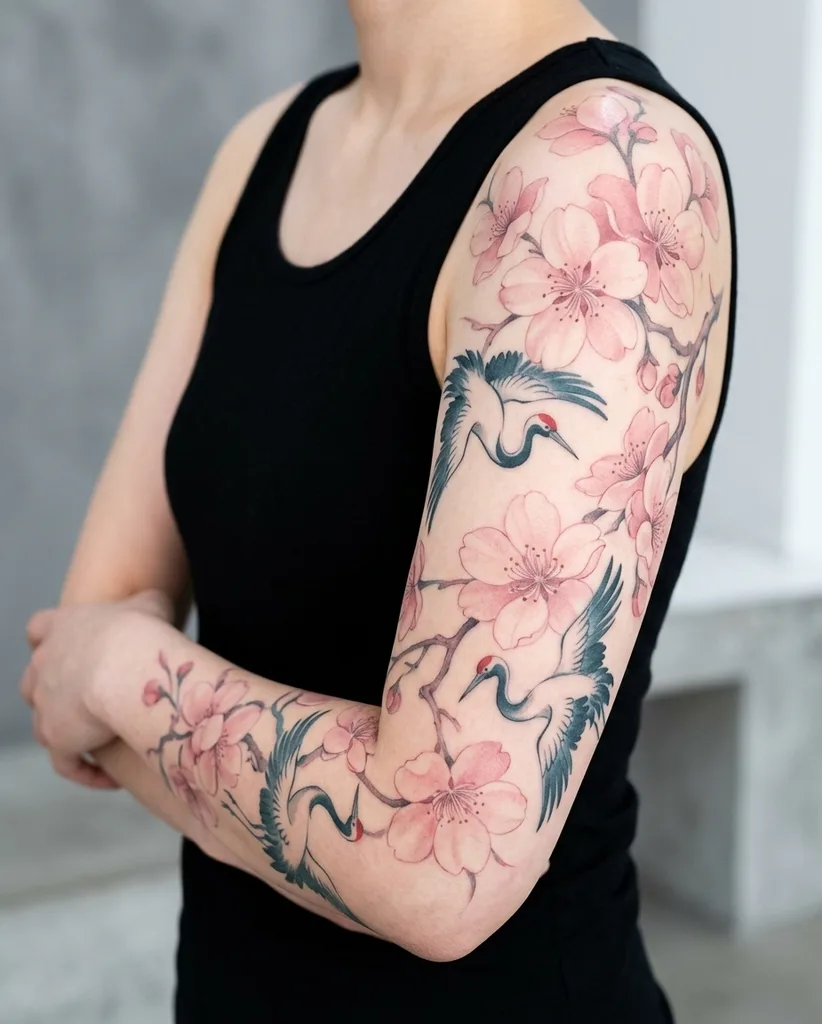 Generate similar design →
 Generate similar design →
 Generate similar design →
 Generate similar design →
 Generate similar design →
 Generate similar design →
 Generate similar design →
Make a tattoo design with Inkspo - Free AI Tattoo Generator